TO A FRUITFUL 2014

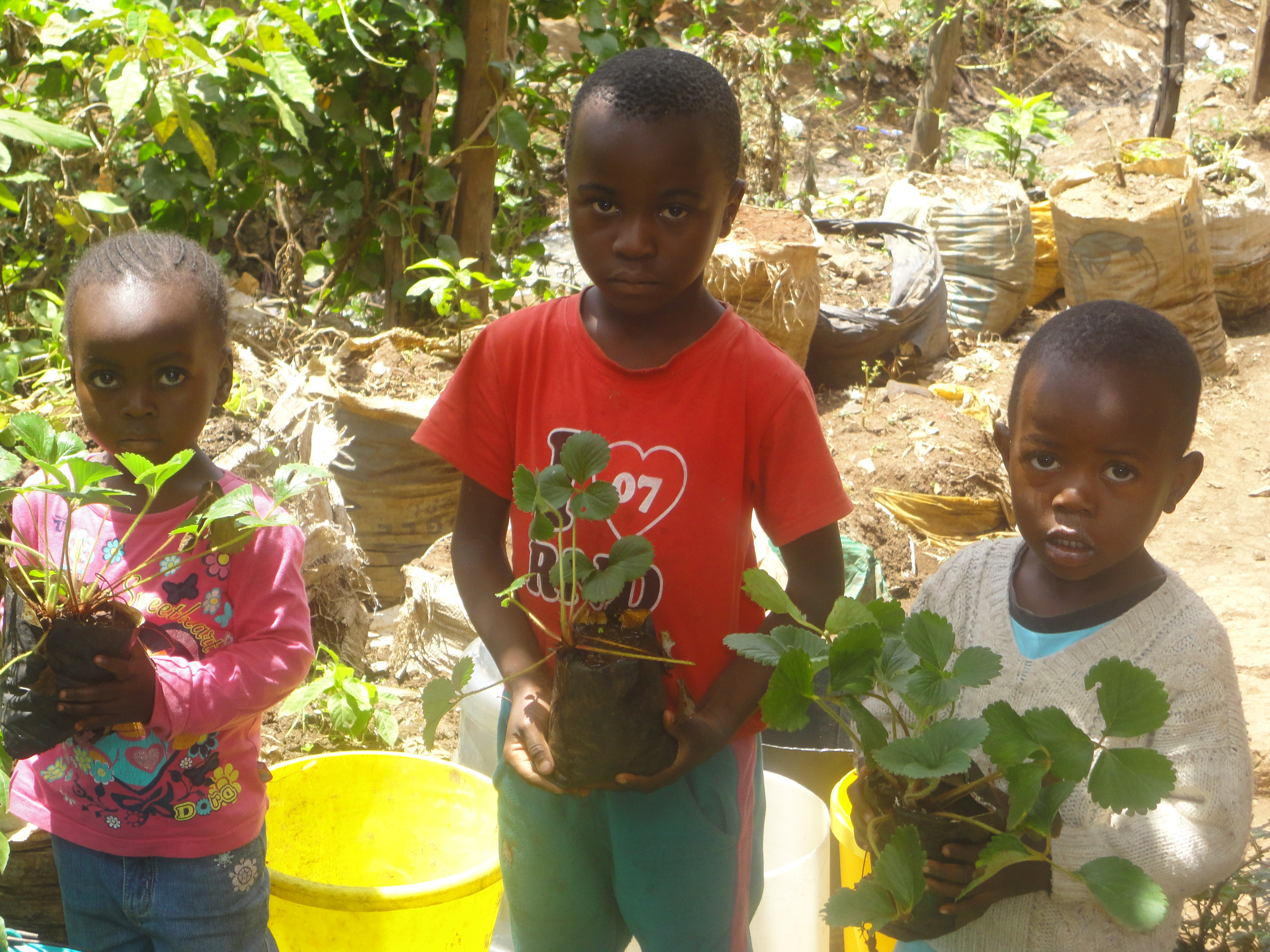
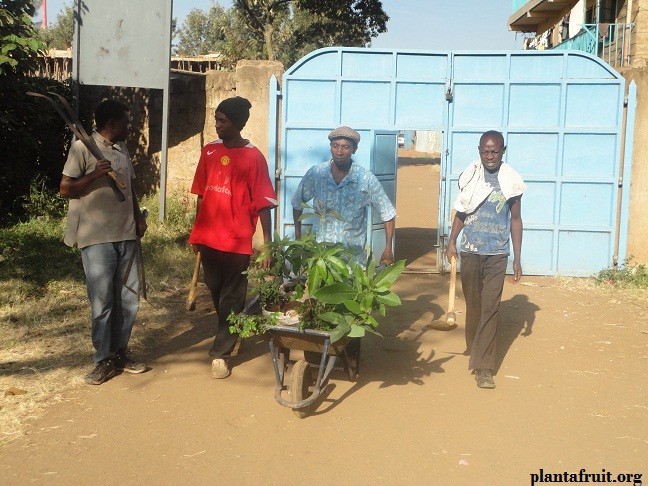
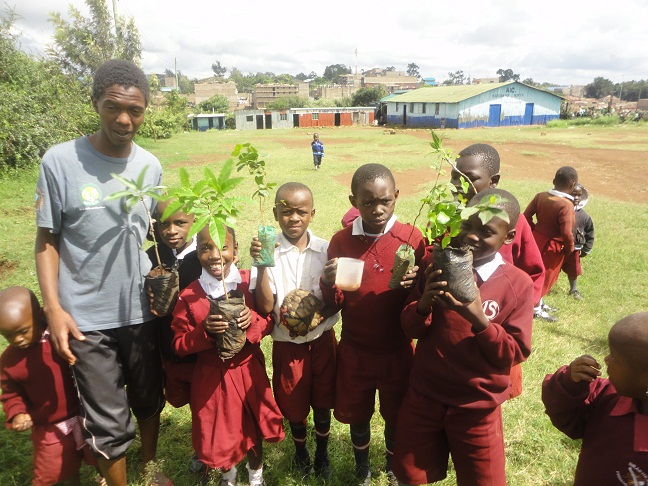
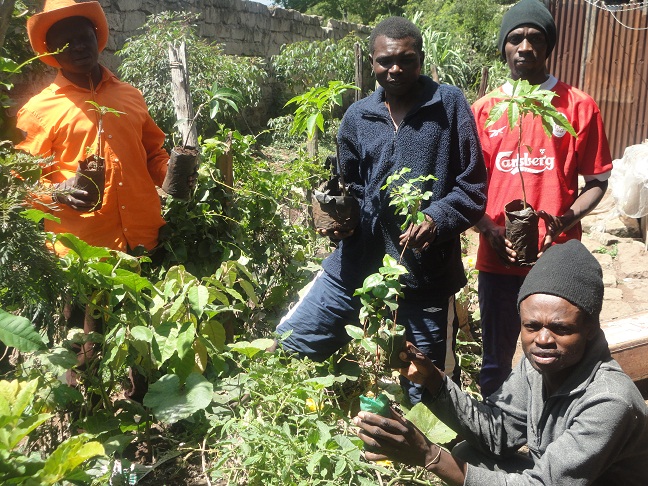
Happy New Year! Let’s start off by wishing each and everyone a prosperous 2014 and a year full of positive actions and results.  Despite the many challenges and disruptions, 2013 was a great year and without it we wouldn’t be in 2014. We thank all our clients, supporters, volunteers, partners and staff for the progress and miles we have attained so far. In partnership with schools and local communities, we have been actively involved in creating demo farms that will be producing certified fruit seedlings and serve as centres of learning where community members will purchase their seedlings and learn more about horticulture especially orchard development and management. So far, our pilot project at Kariobangi primary school is on track and will be offering training in the near future. Plans are underway for us to partner with institutions that will ensure relevant and high quality practical training is offered.

 We are still very much focused in our push to encourage guys to plant fruit trees either by investing in fruit farming or planting fruits in their home gardens and landscapes for personal consumption. Our role is to ensure farmers and home gardeners get quality seedlings from certified sources and all the necessary information on how to plant and take care of their plants to ensure quality yields that meet health and market standards. High quality grafted seedlings leads to increased production that improves the health of families not only by providing a higher nutrition diet, but also by generating profits from surplus. Fruit production and consumption is low in East Africa and Africa at large. We want to empower farmers’ especially small-scale farmers who are the majority by encouraging them to embrace sustainable farming practices and diversify into fruit farming as they adopt agro forestry.

One of our main objectives is to deepen awareness on the importance and adoption of agribusiness among the youth. We are focusing on primary and secondary schools to initiate orchard development and management. There is need for mental migration among the youth who regard agriculture as a poor man’s activity. The youth should be encouraged to venture into agriculture not as something that is cool but as an economic activity that has potential to create wealth and as an obligation to feed the world. From our practical experiences, agriculture isn’t cool; it requires self-drive, hard work and dedication for one to realize its coolness. There are platforms and initiatives that assist the youth who are willing to venture in agribusiness and it’s up to the youths to rise to the occasion and take advantage of these platforms that include ;  Mkulima Young, Young Professionals in Agricultural Research for Development Youth Agro-Environment Initiative, Agri-Hub Kenya  just to mention a few.

The impact of our work will be greater if we partner and collaborate with organizations and individuals who participate in activities that are similar or relate to what we are doing. This will create synergy among the different players and stakeholders and avoid duplicating efforts leading to greater impacts using little resources. Most of our projects are designed as open-ended strategies that call for the refinement of the strategy as we proceed with implementation. This makes us open to suggestions, advice and any technical assistance that may come our way. The demo farm at kariobangi North primary School is almost one year old, we have planted different varieties of fruits mixed with cassava, sugarcane and indigenous vegetables. We promote organic farming, agro forestry, permaculture and conservation agriculture. In case you are in Nairobi feel free to pay a visit to the demo farm and purchase fruit seedlings as you learn more on fruit farming. Feel free to give us a call on +254714118794 or drop us a mail at admin@plantafruit.org for more info. Once again we wish you all a prosperous year, let’s keep it real in 2014 and pray the Almighty will bless us with strength and wisdom and crown our efforts with success.


Home gardens and fruit trees crucial for nutrition- By Dr. Oliver Moore

Home gardens and fruit trees crucial for nutrition

Fruit and other tree products in home gardens can contribute positively to family nutrition and health, in places where improved nutrition is most needed. According to Katja Kehlenbeck of ICRAF, who presented her research at the FAO’s Forests for Food Security and Nutrition Conference on 13th may.

While Latin America, Asia and other regions have their own nutritional challenges, in Sub-Saharan Africa malnutrition is still widespread and consumption of fresh fruits and vegetables (FFVs) is just 1/3 the WHO’s recommended 146 KG per year and person. Deficiencies in Iron and vitamins A and C is especially problematic in this region.

There are solutions, however. Some indigenous fruit trees, such as Adansonia digitata (Baobab) can provide, through its fruit pulp, far higher levels of vitamin C and iron than commonly fruits such as mango and orange. There is a large variability in levels of vitamin C in fruits of different individual baobab trees – from 150-500 mg per 100g edible portion – but even the lowest figure here is far higher than other fruits Typically, mango and orange only have levels of 28 and 51 mg Vitamin C per 100 g edible portion, respectively.

Cultivating a diversity of fruit trees in farms and Home Gardens can also help cope with the ‘hunger gap’, a period of food insecurity typically occurring before the harvest season of the staple crop. In places such as western Kenya, where the hunger gap occurs from March to May, indigenous fruit trees such as Rhus vulgaris as well as exotic fruits such as jackfruit could provide for nutritional and health needs in this difficult period.

Households benefit from the numerous products and services trees, including fruit trees, can provide. These include products such as nutritious fruits, leaves for vegetables, fuelwood and timber, fodder and medicine. Service functions include shade, improved microclimate, control of soil erosion, diversification and also broader beneficial services such as carbon sequestration.

Homegardens, manifest as complex, mixed agroforestry system around the homestead, are often women managed.

These systems too provide many useful products and services, in subsistence, commerce, sociocultural and ecological terms. Fruit trees are an important part of homegarden systems as confirmed by the high number of fruit tree species found in homegardens. In Sulawesi, for example almost 9 fruit tree species were cultivated on average in a homegarden.

  1. Subsistence: Fruits, Vegetables, Spices, Medicine, Staple foods, Stimulants, Timber and Fodder.
  2. Commerce: Cash
  3. Socio-Cultural: Gifts, Sacrifices, Pride, Pleasure, Aesthetics, Employment, Socialising
  4. Ecological. Habitat for wild Flora + Fauna, Pest + Disease control, Nutrient Cycling, Microclimate, Soil erosion.

Despite these multiple benefits, there is underutilization of fruit trees, particularly indigenous fruits, in many regions. In the Nuba Mountains, Sudan, for example, gardeners cultivate the fruit tree Ziziphus spina-christi rather for providing fencing material then for the fruits. In homegardens of Sulawesi, Indonesia, some fruits from homegardens such as pawpaw were fed to pigs rather than consumed by the family.

There are threats to homegardens too. The transformation of traditional mixed home gardens into commercial vegetable gardens, for example in the Nuba Mountains, Sudan, has been problematic. In a policy sometimes promoted by NGOS, donated exotic vegetable seeds have been planted. However, this has led to the cutting down fruit trees to meet the light requirements of the vegetables, as the trees blocked sunlight. This short-sighted policy also can have gender implications: power shifts over to the man of the household, who then sells the vegetables in the market and controls the money the vegetables generate. This can then be spent in a way that isn’t beneficial to the women and children left behind on the homestead, as Katja explains:

Similar problems may occur when commercial cacao/coffee gardens replace the traditional mixed home gardens in Sulawesi.

These is much done, but more research needs to be done to improve the performance of homegardens.

Kehlenbeck pointed out that we need to document production and utilization data for food trees in homegardens to answer key questions:

  1. How do they these food trees contribute to family nutrition, and does this change through the seasons?
  2. How do they contribute to family income, and how is that income spent?
  3. What is the nutrient content of products from lesser known and lesser used tree species?
  4. What are the cultural, socio-economic and environmental factors influencing cultivation of food trees and consumption of their products?

She also recommended that year round production of fruit should be targeted by developing fruit tree portfolios which is a combination of species and cultivars with different harvest seasons, and prioritising the domestication of important indigenous species could also prove beneficial. Then, the best, hardiest, most nutritious species and cultivars can be selected and cultivated in a home garden setting.

To take one example: the variability of vitamin levels between different individual Baobab trees suggests research into extensive sampling of baobab trees, characterisation of the fruits’ vitamin content, selection of superior mother trees, propagation of these trees and dissemination of the seedlings to farmers for cultivation – which is the process of domestication.

Kehlenbeck was keen to emphasise that research programmes need to be multi-faceted. For example, cultural factors are an important, sometimes missing link in helping agroforestry initiatives take root. A better understanding of local beliefs and customs can help improve understanding of what works and what doesn’t ,on the ground in the real world outside of the research institutes.

Katja Kehlenbeck’s take home messages are that tree products are important for nutrition that trees in homegardens contribute to family nutrition (directly and indirectly) and that the potential for home gardens is not fully exploited yet.

Dr. Oliver Moore


Youth have to claim their seat at the table

There is great need to cultivate a new breed of practitioners for sustainable progress and innovative career patterns for young people in agribusiness and we at PLANT A FRUIT are working towards that.

wanenegrace's avatarThe FARA Social Reporters Blog

When it comes to youth and agriculture, most of us think we know what needs to be done: governments and other stakeholders need to develop innovative approaches and policies to get more youth involved in this critical sector. It goes without saying that the stakeholders are expected to involve the youth in innovation and policy formulation. Not much is said about what the youth can do themselves to facilitate their involvement in these processes.

Africa is currently the most youthful continent in the world. It is estimated that by 2015, youth will make up 60 percent of the population on the continent. These young people, who will soon be the drivers of the continent’s economy, need to know that they have a right to be involved in high-level policy dialogues on agriculture and begin actively seeking opportunities to participate.

View original post 292 more words

PLANT A FRUIT

PLANT A FRUIT.

Fruit orchards in schools Project

Fruit orchards in schools Project.

Plant a fruit for peace campaign

“When we plant trees we plant seeds of peace and hope”

Wangari Maathai

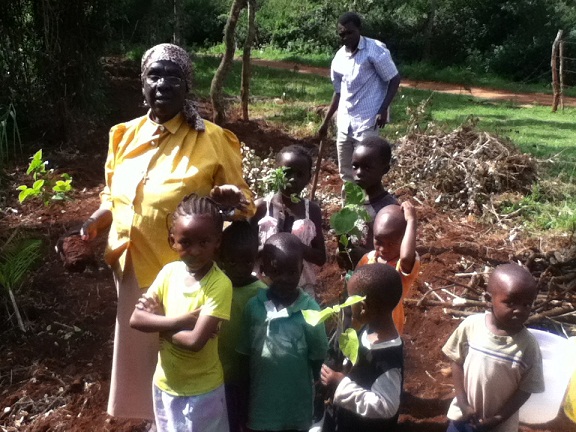
Our plant a fruit for peace initiative kicked off in Jan and ended on 28th feb 2013.We planted a total of 108 fruit seedlings of different varieties in various institutions. We encountered a lot of challenges but it was all fun. One major thing we noted as an organization is that Kenyan youths are willing to engage themselves in initiatives that can create social change but they lack platforms where they can fully express themselves. We have tasked our management committee to come up with innovative ways that we can use as an organization to engage these young ones on a long-term basis

We partnered with 2 churches, 2 schools,1 community based organization and 2 youth groups to plant 108 fruit  trees for peace.This proved that there is a lot that can be done if we work together in coming up with local solutions that address our problems.We are upbeat and bullish of the fact that we will have peaceful elections come Monday 4th March 2013. Our sincere thanks go to all our stakeholders, clients, volunteers, members and staff for their contribution towards this initiative. The fruit trees planted will be monitored to ensure that they grow well without disturbance or neglect.

@ Kariobangi primary-We planted 30 fruit seedling

Image

Image

@ Karen-Planted 25 fruit seedlings

mOKOYETI kAREN

@ Kariobangi-Planted 7 fruit seedlings

Image

@ Kariobangi

Image

@ AIC Church-Planted 14 fruit seedlings

Image

@ Anglican Church-Planted 12 fruit seedlings

Image

@ Taf Initiative-planted 20 fruit seedlings

Image

This blog is a must share,its a good start for 2013.

mavunomania's avatarBlog.Mavuno

735179_533425406676149_1722723002_n

If you knew you would NOT fail this year, what is the one thing you would do differently? What’s the one thing you’d do if you knew you were guaranteed to succeed? Invest everything? Go back to school? Start that dream business? Stop paying rent? Propose to the girl of your dreams?

2013 is a new year, and a new beginning, a time to leave the past behind and press on to what’s ahead. In the bible, every 50th year was the Jubilee and during that year, all that had been lost or taken away was restored. (Lev.25:10) As we listen to and apply God’s word, 2013 – our 50th year as a nation – will be a Jubilee year for the people of Mavuno Church.

It will be a year of freedom and celebration, a year of debt cancellation and release from bondage in…

View original post 2,154 more words

Leadership is like a tree, a fruit tree

Leadership is like a tree, a fruit tree

8

For starters “Challenging the Rulers: A Leadership Model for Good Governance” is a good read. This book is a must read for every Kenyan who is interested in good leadership and wants to make an informed decision as we vote for our leaders in the 2013 elections. Hope am not infringing on any ones right by sharing this link

www.cmd-kenya.org/files/The_Book_Challenging_the_Rulers.pdf

In one short paragraph let me summarize this book.

Leadership is like a tree, a fruit tree “Planted in a soil of democracy, with a tap root of constitutionalism, Supported by a system which draws its strength from the leadership principles of servant hood, effective communication strategies and a culture of accountability. Characterized by strong result-oriented adultilised in various development fruits including Infrastructure Development, Human Development, Social Development, Economic Development and Environment Management”. Like a good fruit tree, leadership is judged by the fruits it produces

Kenyans are soon going to the ballot to elect their leaders. We just don’t know how the elections will turn out to be. Our prayer is a prayer for peace, that’s why we have mobilized our staff and members to plant a fruit tree for peace and to write to God for peace. We love what our fellow Kenyans are doing @ www.writetogod.co.ke and we as an organization have decided to reach out to 100 kenyans to write to God. By the time of writing this blog, a total of 6986 letters had been received, the target is 1 million there is still much to be done.

blessing

Other than prayer and writing to God, we must act in a peaceful manner and spread the message of Peace, Love and Unity. I invite all our friends and stakeholders both at home and abroad to say a prayer for Kenya.Spare 5 minutes and write to God via www.writetogod.co.ke. God bless Kenya, Africa and the whole world

Working with kids

The first phase of our project at Karen can be deemed a success. Together with the kids at Mokoyeti Brook centre- a CBO in Karen and various stakeholders, we planted 30 fruit trees. There are many joys and rewards received while working with kids. The major score of this project was guiding these young ones into becoming responsible citizens of Kenya and the planet as a whole.

The kids themselves planted the fruit trees and up to now still take care of the planted fruits. Each and every kid has his/her week to look after the fruit trees and ensure they get enough water. As the kids grow they have to take it upon themselves to ensure the culture of planting fruits is extended to the rest of the neighboring communities through various strategies adopted amongst themselves.

Our prayer is that the rest of Kenyans should join us in our mission to ensure each and every Kenyan has a fruit tree in their yard. Kenyan kids and youths should encouraged to embrace agriculture. As big governments are reluctant to combat climate change, we believe its up to individuals and the private sector to lead the way in conserving the environment. We have to lobby for homegrown policies that ensures the environment is conserved, and don’t have to wait for some big foreign government to come to our rescue.