Blog Archives
Feijoa Fruit Seedling Cultivation Tips
Native to southern Brazil, feijoa is an exotic fruit of subtropical origins that can be readily grown in many parts of Kenya. This fruit has a unique flavor and aroma, and is attributed to having a number of medicinal values. Guavasteen and pineapple guava are some of its common names. It is highly nutritious when consumed fresh and luckily it is well adapted having the potential to do well in different parts of the country. This is reason enough for you to plant a few feijoas just as a custodian, for your own consumption and a source of nutrients.
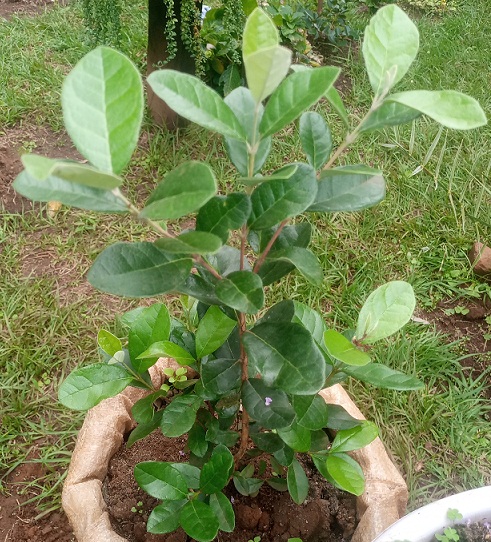
If you opt to plant some, consider the following:
- Climate
Feijoas grow well in the tropics, subtropics and warm temperate areas. If guavas thrive in your location, feijoas will probably do well too. Temperatures between 15°C and 35°C , and an annual rainfall of 1000mm is desirable. You will have to water your plants especially when they are still young or when they show signs of water stress.
- Soil and planting
Most soil conditions are ideal for feijoa cultivation as long the soil drains well and rich in organic matter. Soil PH of 5.0-7.0 is desirable for optimum growth. Ensure your site receives enough sunlight; avoid areas that are prone to cold air and frost.
- Training and pruning
Train your feijoa tree early enough for upright growth and right tree shape. Prune you trees after harvesting season is over. You need a tree that is a metre above your height. This will enable easier maintenance and harvesting.

- Pests and disease
Feijoa even though resistant to pest and diseases, you still need to ensure your plants are well fertilized to avoid any nutrient deficiencies that may lead to disease and pest attack. Common pests include: fruit fly, caterpillars and scales. Leaf spot fungal disease is a major concern that we have not so far. Watch out for any signs of early disease and pest attack and act accordingly.

- Harvesting
Your plant is likely to start fruiting in the 3rd – 4th year of planting. The fruits do not change colour when ripe so it is hard to determine if they are ripe by observation. Fruit that are ripe naturally drop from the tree. Fruits that ripen on the tree will detach easily when harvesting. Plant It!!!
Hass Avocado seedlings
Hass Avocado cultivation
Avocado still is an important commercial fruit in Kenya. Local consumption keeps rising so is the export figures. More farmers are embracing avocado farming especially the Hass variety. For those targeting export market Hass avocado is the right variety to plant.
Here are a few tips on how to navigate your journey to ensure your crop meets the export standards.
- Climate
Climate greatly determines the quality of your fruit. 1000-1200 annual rainfall is sufficient. Due to irregular rainfall distribution, you should make arrangements to irrigate your trees. For proper growth and yield, temperature of between 25°C and 30°C is desirable
- Soil and fertilization
Your soil should have a good structure and well aerated. Avocados cannot withstand flooding or poorly drained soils. Soil PH of 5 to 7 is proper. Strive to keep your soil fertile and rich in organic matter. Results from your soil test analysis will inform you on the required type and amount of fertilizer to apply.
- Planting Hass avocado seedlings & pollination requirement
We strongly recommend you plant well established certified seedlings. Purchase seedlings that have a strong stem and are above knee height. When planting ensure the grafted union is well above the ground. There are different spacing regimens; 3m by 3m, 4m by 4m 5m by 5m,………. 8m by 8m. Embrace what suits you.

For pollination purposes it is important to ensure you have trees of two different flowering types; A and B. Hass exhibits type A flowers and is advisable to plant a type B variety such as Fuerte or Linda close by. For every 10 Hass avocado seedlings, plant 1 Fuerte seedling or Linda seedling. The presence of both flower types will enhance cross pollination encouraging optimal fruit development and improves production.
- Pruning and training.
It is important you train and prune your trees when they are still young to reinforce lateral growth and multiple structure branching. You are also to ensure there is no sucker growth below the grafted union. Later on trees are only pruned to remove excessive growth or any dead branches and to attain desired tree shape and height.
- Crop care and protection.
Contrary to popular belief that avocados are not susceptible to disease or pest attack, this is not the case. Pests of significant economic importance include:
- Fruit flies
- False codling moth
- Thrips
Major diseases are: Anthracnose, scab, stem end rot, root rot, bacterial canker
Take preventive measures to minimize cases of disease or pest attack. When planting, make sure you plant suitable and healthy seedlings that are free from disease. Embrace good growing and sanitation practices. These include:
- Using pheromone and sticky traps to monitor and reduce flying pests.
- Mitigate any attacks using approved bio pesticides and fungicides
- Proper weed control and mulching
- Irrigate your trees on a need basis
- Ensure your trees are well fertilized
- Use foliar spray to address any micro nutrients deficiencies especially boron and zinc

- Harvesting
Before harvest, it is important to assess the maturity of the fruit. Avocado fruit matures on the tree but ripens off the tree. Maturity is estimated by the percentage of dry matter in the fruit; a minimum of 23% dry matter is acceptable for Hass avocado. The ministry of agriculture has enforced specific timelines when avocados for export are harvested to avoid the harvest of immature fruits. Get technical advice on when and how to harvest your avocadoes. Ensure harvested fruit is handled with care to minimize fruit damage.
- Marketing your crop
For new small scale farmers; those who have 5-20 trees, lack of capacity will be a major challenge. There is need for small scale farmers in avocado growing counties to encourage one another by forming clusters that will boost production. Quality of your product will determine your access to the export market. You will be doing a good job if more than 80% of your produce is accepted for export.
As a dedicated farmer you should ensure that your fruit possess the following quality attributes:
- Clean, looks fresh and in good shape.
- Free from pests
- Have no skin defect or any visible damage
- No internal defects
- Free from any foreign smell or taste.
- Of great taste when ripe
If farmers can meet capacity and the quality attributes above mentioned, finding market and a good price for their produce will be much easier. Onward ever
Dwarf Guava Cultivation
Guava is one of the most important and popular fruit in Kenya but also one of the most overlooked fruit type. Commercial guava orchards are a rare sight, a majority of farmers plant a few trees or rely on guava trees that grow wildly in their home forests. Here are some of the reasons why you should plant guavas in your orchard:
- Low cost of production, it needs less fertilizer, irrigation & plant protection.
- High nutritive value; rich source of vitamin A & C, calcium, phosphorous and iron.
- Availability of dwarf varieties which produce fruits with less seeds and more flesh; ideal for commercial cultivation.
- Guavas are hardy and give an assured crop with minimal care.

Factors to consider before planting:
- Climate & Soil
Guava performs well in both tropical and subtropical regions that receive an annual rainfall of 1000mm. Temperatures that range between 15°C and 35°C are ideal for optimum growth and development. Guavas are more drought resistant and can tolerate temperatures of up to 45°C.
- Soil requirement & fertilization
Being a hardy crop, guavas thrive in all soil types that are not prone to waterlogging. Soil PH of 5.0-8.5 is suitable for guava cultivation. For maximum production ensure your soil is rich and high in organic matter. Guavas grow fast and are heavy feeders therefore manure application is desired from time to time. Fertilizer application will be determined by the age of the tree, soil status and your management practices.
- Irrigation
Young seedlings need regular irrigation in instances where there is no rainfall. Mature tree are irrigated on a need basis when trees show signs of stress or when fruiting to avoid excessive fruit drop.
- Training & Pruning
Prune to shape your trees and maintain desired tree height. Dry, damaged or diseased branches should be removed. Train your mature guava trees by bending the shoots to activate dormant buds and induce flowering
- Plant protection
Guavas are rarely attacked by pests and diseases but it is still important to ensure your plants are healthy and well protected against any attacks. Major pests include: fruit fly, scales and mealy bugs. Diseases to watch out for are: Anthracnose, guava wilt and fruit canker.

- Harvesting
You can start harvesting your guavas from the third year onwards. Yield varies depending on variety, age of tree and orchard management practices. Guavas bruise easily, harvest with care to avoid any damage on the fruit. They can be consumed fresh or blended to produce highly nutritious juice.
Dragon Fruit cultivation in Kenya
Dragon fruit is a vine-like climbing cactus that serves both as a fruit crop and an ornamental plant. Dragon fruit is mostly eaten raw as fresh fruit. It can also be processed into juice, wine and jam. Dragon fruit cultivation is picking up in the country. We have different categories of farmers cultivating this fruit crop;
- Those who plant mainly for value addition especially wine.
- Farmers who sell their produce to fruit vendors or directly to consumer
- And there those who plant for own consumption
This post is mainly targeted for you who wish to cultivate a few plants for your nutrient requirement. There many reasons for you to have this plant in your garden;
- Dragon fruits are highly nutritious
- Low maintenance cost
- Minimal after care
- can be planted in area that has limited space
- dragon fruit is a fast return perennial fruit crop with production expected from 18-24 months after planting
- Once grown you can harvest for more than 20 years

The major constraint is the use of trellises. Dragon fruit plants are vine-like and need support hence the need of posts either concrete or wooden.. This article will take you through the basics of dragon fruit cultivation that include; climate & soil requirement, propagation & varieties, planting & irrigation, plant care, harvesting.
- Climate & soil-Dragon fruit prefer tropic and sub tropic regions that have high temperature, 20-32°C is sufficient. You should plant dragons in well drained soils with high organic matter. Like most fruit crops it does not tolerate waterlogging.
- Propagation & varieties- Dragon fruit seedlings are mostly propagated by cuttings. There are five main dragon fruit types:
- Pink fruit skin with white flesh
- Red fruit skin with red flesh
- Red fruit skin with white flesh
- Yellow fruit skin with white flesh
- Yellow fruit skin with red flesh
- Planting & irrigation-For proper upright growth the plants need strong support structures. Concrete or wooden posts are mostly used. The supporting posts are placed in the middle of the planting hole well in advance before planting. For best growth and fruit production plant dragon in an area that receives enough sunlight and less wind. Dragon plants require less water compared to other fruit plants. They require frequent irrigation at the time of:
- Planting
- Flowering
- Fruit development stage
- And during hot dry climate
- Plant Care– These after care activities will ensure proper plant growth and fruit development.
- Fertilization-Dragon fruit demand for nitrogen is comparatively less compared to other fruit crops. You can grow them organically using compost and farm yard manure
- Pest & diseases management-there are fewer disease and pest attacks. As a good practice, prevention is better than cure. There may be cases of thrips, mealy bugs and slug attack. Be on the watch out for any early signs of attack and act to deter any attack. Anthracnose is the most significant disease.
- Pruning & training- prune your plant to remove all damaged or diseased stems. Ensure any stem that touches the ground is removed. Train the main stem and tie it to the support structure as the plant grows. Once the stem reaches the top, cut the tip to induce branching
- Harvesting– The fruits are likely to be ready for harvest 45-50 days after fruit set. Fruit ripen at different times and should be selectively harvested. You should carefully remove the fruits from the plant for they are easily damaged. The average fruit weight is 300 grams but with proper tree care and fruit thinning you can attain weight of between 850-1000 grams per fruit.
If you are entrepreneurial then dragon fruit could be an asset. But before heavily investing take time to do test plants and familiarize yourself with the cultivation process. Learn to do more using less, your establishment cost should be minimal-we can assist in this area. Have a clear road map of who your customers are and how your product will reach them. Is there market for the fruit? We cannot tell. We believe it is your work as an entrepreneur to find market for the fruit.

kitale Horticulture Project
Since the start of the year, we have been implementing our first demo project in kitale geared towards sustainable fruit farming. The project objective is to empower local communities through sustainable seed finance, mentorship and technical support in natural food farming technology and sustainable agribusiness. We seek to enable local wo/men and youth build resilience for their livelihoods against the effects of climate change, pandemics, natural disasters and calamities. We intend to document and disseminate successful strategies for replication and scale up in other parts of the country.
Smallholder farmers have great potential that need to be harnessed and converted into income generating models. We do believe horticulture can play a crucial role in uplifting the living standards of small scale farmers in areas such as Kitale and its environs. Climatic condition in this area is ideal for cultivation of fruit trees and vegetables, what is lacking is a change of mindset and technical skills. This project will demonstrate to small scale farmers how cultivation of fruits, vegetables and running small ventures can be profitable. Giving us impetus is the latest data from the directorate of horticulture that shows an increase in earnings from fruits and vegetables. There is a dietary need to boost body immunity making fruits and vegetables be in demand world over. The importance of fruits, nuts and vegetables in healthy lifestyles has benefitted horticulture making it lucrative.

The main fruit we focusing on is avocado; hass and fuerte varieties targeting export market. The economic and social importance of avocado cannot be gainsaid. The fruit has a large market as a fresh fruit, processed foods derived from it and as an ingredient in oil, cosmetic, soap, and shampoo. Kenya as a country still has a lot of ground to cover for it to be the leading exporter of quality avocadoes. His Excellency, the Deputy President Dr. William Ruto is on record encouraging farmers to diversify mentioning avocado as an alternative crop that can help farmers in this area increase income. A good number of farmers have heeded the message and have started embracing avocado cultivation making Kenya one of the fastest growing avocado exporters. Governors such as Hon. Jackson Mandago, Wycliffe Oparanya, and Lee Kinyanjui among others have also encouraged and supported farmers by providing grafted avocado seedlings. Some counties are in the process of establishing avocado factories to serve local farmers with ready market for their produce.
Total production does not equal the total amount of fruit exported because only a small percentage meets export quality. As much as we are increasing the acreage under avocado, it is prudent to narrow the gap between what is produced and what is exported by ensuring top quality is produced. Our main aim is to ensure small scale farmers can produce the desired quality of fruit that can compete in international market. Farmers within project area will be advised to plant a minimum of 10 grafted avocados per homestead. We encourage farmers to form clusters that will in turn form strong grower associations which are vital to ensure farmers are up to date with the trends in the avocado industry. Part of the strategy is to encourage farmers to plant veges and medium term fruits for the first 2 years before the avocado trees mature. There is a wide range of veges that farmers can do for their own consumption and for both local and export market. They include: kales, spinach, cabbage, managu, french beans, peas, capsicum, onions and any other that the market requires. There is also a component of poultry production where farmers will be encouraged to keep poultry and given necessary training and seed finance.

This demonstration project will offer practical education and knowledge transfer to farmers and also seek to expand and document local knowledge. We intend to partner with farmers as we learn how to manage the farm as a business. Together we will develop a curricular that addresses local needs covering different topics. This will include; being consumer driven, people and environment friendly, planting what is adapted to your farm, orchard maintenance, record keeping, cutting costs and improving outputs, improving quality, sales enablement, how to differentiate your product for a premium price, managing change. The main objective of this curricular is to ensure farmers run profitable environment friendly ventures. We intend to link the farmers with various buyers and create a platform where farmers can trade amongst themselves. Small scale farmers from project area who wish to be part of this initiative can reach us on +254715963005 or admin@plantafruit.org


 Natural Green Movement