Blog Archives
How to grow avocado profitably in Kenya.
This note is about avocado business strategy, and strategies do change from time to time. Let’s ride!
1. Location.
Remember the 3 C’s of location.
a) Clusters-this has to do with capacity that will encourage exporting firms to come buy your product. Unless you are doing large scale,it is important to join forces with other farmers to meet capacity.
b) Climate should be well suited for optimum production.
c) Clients. Who are your customers/market? How will your products reach them?
2. Plant right varieties.
Know what Your market wants and plant those.
3. Proper tree care and management .
-Irrigation.
-Fertilization.
-Crop protection.
-Thinning and pruning
– Harvesting

4. All year round production.
For You to have positive cash flow ensure all year round production. Plant a mix of early, mid and late fruiting seasons varieties.
5. You have to target both local and export market.
Hass, Fuerte and to some extent Pinkerton varieties are preferred for export market. Locally, size dictates the price. There are varieties that produce large size avocados of great taste that transports well, you need to plant those too.
6. Enrol on Etims @ kra
7. Consider branding Your products.
Using online and traditional marketing channels make Your brand standout and be the go to person for direct farm to plate organic avocados.
You as a farmer are the backbone of Your economy and the economy of our country. Planting is Caring, plant more !!!
Feijoa Fruit Seedling Cultivation Tips
Native to southern Brazil, feijoa is an exotic fruit of subtropical origins that can be readily grown in many parts of Kenya. This fruit has a unique flavor and aroma, and is attributed to having a number of medicinal values. Guavasteen and pineapple guava are some of its common names. It is highly nutritious when consumed fresh and luckily it is well adapted having the potential to do well in different parts of the country. This is reason enough for you to plant a few feijoas just as a custodian, for your own consumption and a source of nutrients.
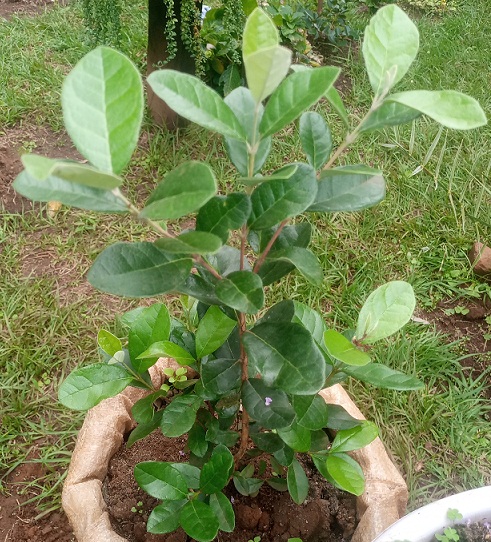
If you opt to plant some, consider the following:
- Climate
Feijoas grow well in the tropics, subtropics and warm temperate areas. If guavas thrive in your location, feijoas will probably do well too. Temperatures between 15°C and 35°C , and an annual rainfall of 1000mm is desirable. You will have to water your plants especially when they are still young or when they show signs of water stress.
- Soil and planting
Most soil conditions are ideal for feijoa cultivation as long the soil drains well and rich in organic matter. Soil PH of 5.0-7.0 is desirable for optimum growth. Ensure your site receives enough sunlight; avoid areas that are prone to cold air and frost.
- Training and pruning
Train your feijoa tree early enough for upright growth and right tree shape. Prune you trees after harvesting season is over. You need a tree that is a metre above your height. This will enable easier maintenance and harvesting.

- Pests and disease
Feijoa even though resistant to pest and diseases, you still need to ensure your plants are well fertilized to avoid any nutrient deficiencies that may lead to disease and pest attack. Common pests include: fruit fly, caterpillars and scales. Leaf spot fungal disease is a major concern that we have not so far. Watch out for any signs of early disease and pest attack and act accordingly.

- Harvesting
Your plant is likely to start fruiting in the 3rd – 4th year of planting. The fruits do not change colour when ripe so it is hard to determine if they are ripe by observation. Fruit that are ripe naturally drop from the tree. Fruits that ripen on the tree will detach easily when harvesting. Plant It!!!
Hass Avocado seedlings
Hass Avocado cultivation
Avocado still is an important commercial fruit in Kenya. Local consumption keeps rising so is the export figures. More farmers are embracing avocado farming especially the Hass variety. For those targeting export market Hass avocado is the right variety to plant.
Here are a few tips on how to navigate your journey to ensure your crop meets the export standards.
- Climate
Climate greatly determines the quality of your fruit. 1000-1200 annual rainfall is sufficient. Due to irregular rainfall distribution, you should make arrangements to irrigate your trees. For proper growth and yield, temperature of between 25°C and 30°C is desirable
- Soil and fertilization
Your soil should have a good structure and well aerated. Avocados cannot withstand flooding or poorly drained soils. Soil PH of 5 to 7 is proper. Strive to keep your soil fertile and rich in organic matter. Results from your soil test analysis will inform you on the required type and amount of fertilizer to apply.
- Planting Hass avocado seedlings & pollination requirement
We strongly recommend you plant well established certified seedlings. Purchase seedlings that have a strong stem and are above knee height. When planting ensure the grafted union is well above the ground. There are different spacing regimens; 3m by 3m, 4m by 4m 5m by 5m,………. 8m by 8m. Embrace what suits you.

For pollination purposes it is important to ensure you have trees of two different flowering types; A and B. Hass exhibits type A flowers and is advisable to plant a type B variety such as Fuerte or Linda close by. For every 10 Hass avocado seedlings, plant 1 Fuerte seedling or Linda seedling. The presence of both flower types will enhance cross pollination encouraging optimal fruit development and improves production.
- Pruning and training.
It is important you train and prune your trees when they are still young to reinforce lateral growth and multiple structure branching. You are also to ensure there is no sucker growth below the grafted union. Later on trees are only pruned to remove excessive growth or any dead branches and to attain desired tree shape and height.
- Crop care and protection.
Contrary to popular belief that avocados are not susceptible to disease or pest attack, this is not the case. Pests of significant economic importance include:
- Fruit flies
- False codling moth
- Thrips
Major diseases are: Anthracnose, scab, stem end rot, root rot, bacterial canker
Take preventive measures to minimize cases of disease or pest attack. When planting, make sure you plant suitable and healthy seedlings that are free from disease. Embrace good growing and sanitation practices. These include:
- Using pheromone and sticky traps to monitor and reduce flying pests.
- Mitigate any attacks using approved bio pesticides and fungicides
- Proper weed control and mulching
- Irrigate your trees on a need basis
- Ensure your trees are well fertilized
- Use foliar spray to address any micro nutrients deficiencies especially boron and zinc

- Harvesting
Before harvest, it is important to assess the maturity of the fruit. Avocado fruit matures on the tree but ripens off the tree. Maturity is estimated by the percentage of dry matter in the fruit; a minimum of 23% dry matter is acceptable for Hass avocado. The ministry of agriculture has enforced specific timelines when avocados for export are harvested to avoid the harvest of immature fruits. Get technical advice on when and how to harvest your avocadoes. Ensure harvested fruit is handled with care to minimize fruit damage.
- Marketing your crop
For new small scale farmers; those who have 5-20 trees, lack of capacity will be a major challenge. There is need for small scale farmers in avocado growing counties to encourage one another by forming clusters that will boost production. Quality of your product will determine your access to the export market. You will be doing a good job if more than 80% of your produce is accepted for export.
As a dedicated farmer you should ensure that your fruit possess the following quality attributes:
- Clean, looks fresh and in good shape.
- Free from pests
- Have no skin defect or any visible damage
- No internal defects
- Free from any foreign smell or taste.
- Of great taste when ripe
If farmers can meet capacity and the quality attributes above mentioned, finding market and a good price for their produce will be much easier. Onward ever
Grafted Lemon Cultivation
Lemon is one of the important fruit among citrus fruits. This is a popular and well known fruit among Kenyans hence can be useful to you as a valuable cash crop and as a source of important nutrients. Lemon cultivation can be profitable to home gardeners and small scale farmers who have minimal land. 2-10 lemon trees if well taken care of is sufficient for you to be able to sell fruit in small quantities direct to neighboring consumers or in wholesale quantities to fruit vendors.

Location plays an important role when setting up your orchard. This entails climatic conditions of your area, exposure to sunlight, your soil type and also nearness to the market. Here are some of the factors you should consider when cultivating lemons:
- Climate
Tropic and subtropical regions are suitable for lemon cultivation. They are grown in both dry and humid atmospheres. Lemons thrive in arid and semi-arid areas as long as they receive sufficient water. Locations that are exposed to very low temperatures should be avoided because lemons are sensitive to cold. Temperature of 25-35°C is satisfactory for lemon growth. Excess temperature above 40°C might hamper growth.
- Soil
Lemons as most citrus trees grow well in a variety of soils. Avoid planting lemons in wet soils that are susceptible to waterlogging. Deep fertile well drained soil is suitable for optimum production. Soil PH between 6-7 is sufficient for lemons to thrive
- Propagation & planting
The common propagation method is from seed. Lemons can grow to maturity from seed but they take more years to start fruiting and will produce fruits highly variable in quality. For proper production ensure you plant one year old grafted lemon seedlings. Plant your seedlings at the beginning of the rainy season. A spacing of3- 5 metres between plants is ideal. Size of the hole will depend on your soil type; dig deeper holes if your land has a hard pan beneath the soil.
- Varieties
Ensure you grow a variety that grows and fruits well locally. We have five main varieties that we grow and proven their viability for both subsistence and commercial use.
- Genoa
- Lisbon
- Meyer
- Eureka
- Sour lemon
- Rough lemon
- Fertilization & tree care
After planting your grafted lemon seedlings, top dress using farm yard manure. It is important to test your soil that will inform you on the needed ratios of major nutrient elements. Note that fruit trees require different fertilizer application at different growth stages. Nutrient elements that cannot be obtained from the soil can be supplied by foliar sprays. Other practices like training and pruning are important to maintain trees shape and structure.
- Pest & diseases
Ensure to observe high hygiene standards and keep your plants healthy to minimize pest and disease attack. Prevention is better than cure; your plants will not benefit from a good pest control program if other management practices like proper fertilization, irrigation & tree care are neglected. You will not achieve full productive capability if you neglect pest and disease control measures.
Major diseases include:
- Scab
- Melanose
Most injurious pests to note are:
- Aphids
- Fruit flies
- Moths
- Mites
- Scales
- Thrips
- Mealy bugs
- Harvesting
You will start harvesting your lemon fruits from the third year, grafted seedlings take 2-3 years to start fruiting. Once harvested lemons have a long shelf life and with proper storage can last up to a month increasing the percentage of juice content. Lemons varieties with green peel keep longer than those with yellow peel. Yield and quality vary widely depending on the management practices. Max out your farming! Bless
Grape Cultivation in Kenya
Grapes are mostly grown for wine production, raisin making or for table purpose to be consumed fresh. There are a few farmers and entities engaging in commercial grape cultivation for wine production. A good number of small scale farmers grow a few vines for personal consumption. Kenya has not yet realized its full potential when it comes to commercial grape cultivation despite the fact that this crop can do well in different parts of the country. There are several counties in Rift valley, Nyanza, Eastern, Central and western province that stand a chance of becoming grape producers. With proper county government support and better grower education farmers can produce quality grapes that meet market standards and capacity.

Grape & pineapple intercrop
This post is for you who is interested to plant a few vines for own consumption. We will take you through the basics of grape cultivation and the right varieties to plant.
- Climate
Grape is successfully grown in areas that experience temperature that range from 15oC- 40oC. They generally require hot and dry climate for proper growth and fruiting. An annual rainfall of 900mm is ideal but should be supplemented with irrigation in case rainfall is not well distributed throughout the year. On the contrary, rainfall during flowering and fruit ripening might lead to the spread of downy mildew disease.
- Soil
Although grapes are well adapted to a variety of soil type they prefer deep fertile soil with good drainage, low salinity and PH range of 6.5-7.5. Grapes like most fruit trees are prone to waterlogging; your soil should have good water holding capacity and devoid of any hard pan.
- Propagation, Planting & fertilization
You can get grape seedlings that we propagate by cuttings or grafting. We graft desired varieties on dogridge rootstock. Grafting increases vine life, fruit yield, plant vigor and takes 2-3 years for new vines to begin bearing grapes. Plant your grape seedlings in an area that receives adequate sunlight. Observe a spacing of 3 metres between plants and 2.5 metres between rows. We encourage the use of farmyard manure and biofertilizers to fertilize your vines. Foliar sprays can also be used to supply micro nutrients. Your fertilization program should be informed by soil and leaf analysis.
- Irrigation
Irrigate your vines on a need basis. It is important to note that grapes require more water during berry growth and less water during fruit bud formation and when the fruits are ripening.
- Varieties
You should probably grow table grapes for personal consumption. The table varieties that we grow under organic cultivation are;
- Thompson seedless
- Red glode
- Autumn royal
- Flame
- Maroo
- Alexandria muscat
- Italia
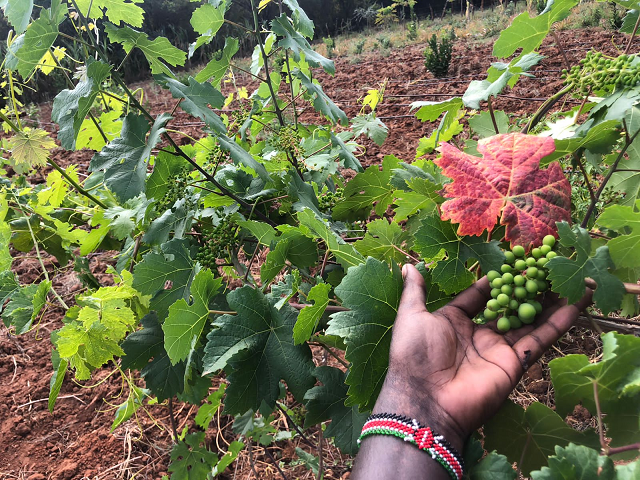
grape Cluster
- Training and pruning
To increase productivity, your grapevines should be well trained and pruned. The mode of training and pruning is determined by the growth habits of your vine. You should exercise much care and precision when pruning. Poor pruning or lack of it leads to poor fruit set. Do more research to up your pruning skills; there are many videos online that will expose you to the different types of training and pruning grapevines.
- Pest and diseases
Ensure you implement plant protection measures to ensure your vines are free from pests and diseases.
The major diseases affecting grapes are;
- Powdery mildew
- Downy mildew
- Anthracnose
Major pests include;
- Thrips
- Mealy bugs
- Leaf hoppers
- Harvesting
Grapes hardly ripen off the tree, so it is proper to harvest them only after ripening. Grape berries kept at room temperature can last a week without spoilage. Different varieties fruit at different time therefore with proper planning and timing you can consume your home grown grapes for the better part of the year. Keep planting!
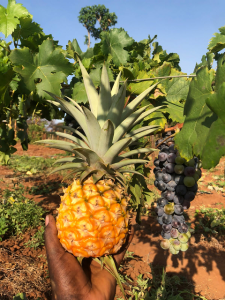
Grape & Pine apple harvest-West Pokot County

kitale Horticulture Project
Since the start of the year, we have been implementing our first demo project in kitale geared towards sustainable fruit farming. The project objective is to empower local communities through sustainable seed finance, mentorship and technical support in natural food farming technology and sustainable agribusiness. We seek to enable local wo/men and youth build resilience for their livelihoods against the effects of climate change, pandemics, natural disasters and calamities. We intend to document and disseminate successful strategies for replication and scale up in other parts of the country.
Smallholder farmers have great potential that need to be harnessed and converted into income generating models. We do believe horticulture can play a crucial role in uplifting the living standards of small scale farmers in areas such as Kitale and its environs. Climatic condition in this area is ideal for cultivation of fruit trees and vegetables, what is lacking is a change of mindset and technical skills. This project will demonstrate to small scale farmers how cultivation of fruits, vegetables and running small ventures can be profitable. Giving us impetus is the latest data from the directorate of horticulture that shows an increase in earnings from fruits and vegetables. There is a dietary need to boost body immunity making fruits and vegetables be in demand world over. The importance of fruits, nuts and vegetables in healthy lifestyles has benefitted horticulture making it lucrative.

The main fruit we focusing on is avocado; hass and fuerte varieties targeting export market. The economic and social importance of avocado cannot be gainsaid. The fruit has a large market as a fresh fruit, processed foods derived from it and as an ingredient in oil, cosmetic, soap, and shampoo. Kenya as a country still has a lot of ground to cover for it to be the leading exporter of quality avocadoes. His Excellency, the Deputy President Dr. William Ruto is on record encouraging farmers to diversify mentioning avocado as an alternative crop that can help farmers in this area increase income. A good number of farmers have heeded the message and have started embracing avocado cultivation making Kenya one of the fastest growing avocado exporters. Governors such as Hon. Jackson Mandago, Wycliffe Oparanya, and Lee Kinyanjui among others have also encouraged and supported farmers by providing grafted avocado seedlings. Some counties are in the process of establishing avocado factories to serve local farmers with ready market for their produce.
Total production does not equal the total amount of fruit exported because only a small percentage meets export quality. As much as we are increasing the acreage under avocado, it is prudent to narrow the gap between what is produced and what is exported by ensuring top quality is produced. Our main aim is to ensure small scale farmers can produce the desired quality of fruit that can compete in international market. Farmers within project area will be advised to plant a minimum of 10 grafted avocados per homestead. We encourage farmers to form clusters that will in turn form strong grower associations which are vital to ensure farmers are up to date with the trends in the avocado industry. Part of the strategy is to encourage farmers to plant veges and medium term fruits for the first 2 years before the avocado trees mature. There is a wide range of veges that farmers can do for their own consumption and for both local and export market. They include: kales, spinach, cabbage, managu, french beans, peas, capsicum, onions and any other that the market requires. There is also a component of poultry production where farmers will be encouraged to keep poultry and given necessary training and seed finance.

This demonstration project will offer practical education and knowledge transfer to farmers and also seek to expand and document local knowledge. We intend to partner with farmers as we learn how to manage the farm as a business. Together we will develop a curricular that addresses local needs covering different topics. This will include; being consumer driven, people and environment friendly, planting what is adapted to your farm, orchard maintenance, record keeping, cutting costs and improving outputs, improving quality, sales enablement, how to differentiate your product for a premium price, managing change. The main objective of this curricular is to ensure farmers run profitable environment friendly ventures. We intend to link the farmers with various buyers and create a platform where farmers can trade amongst themselves. Small scale farmers from project area who wish to be part of this initiative can reach us on +254715963005 or admin@plantafruit.org

Sustainable Fruit Cultivation Enterprise
The agricultural pursuit of fruit growing comprises the science and art of raising and handling fruits and fruit plants for personal consumption or/and for commercial purposes. Fruits can be classified as; tree-fruits, nut-fruits, herb-like fruits, vine-fruits and small fruits. There are two main categories of fruit growers; those producing for own consumption and those producing for the market. There is a third hybrid category of growers who produce for own and sell surplus. Agriculture especially fruit tree cultivation, when at its best has great potential. A fruit tree will naturally produce fruit as long as it is grown in favorable conditions. There are certain hindrances that must be overcome such as pest & disease infestation, poor soils among others. There is no venture that is risk free therefore our main role as farmers is to mitigate/minimize those risks so as to realize profit. This post is addressed to those who want to successfully develop a fruit enterprise for commercial purposes. A later post will be dedicated to those who grow for own consumption and personal satisfaction.
When we mention the term ‘’commercial fruit cultivation’’ thoughts of millions runs in many a mind which is not the case. This is understandable due to the many blogs or prints on how to make millions of cash from certain fruit farm ventures. Don’t have too much fun in the fantasy to face reality; as a fruit grower you should not set before yourself the single standard of money-getting. As much as there is money to be made in agriculture one should also be aware of the non-commercial rewards in fruit growing. The blessing of agriculture to an individual and the nation at large is that it can make its workers happy and comfortable without making them wealthy. Satisfaction can secured just as well on a moderate income as on a large one. It is worrying when the Kenyan farmer is no longer happy or comfortable due to low prices or lack of market, but on a brighter perspective, this helps in getting us farmers’ out of our comfort zones giving us reason to try something else. From a farmer’s perspective, true wealth is health. Going by what is happening on the ground, we can foresee Rift valley and Western Kenya become the biggest producers of hass avocado in the near future. We are also longing for the day when one can purchase locally grown apples from your favorite supermarket/outlet. What of figs, grapes, dragon fruit and pomegranate from North Eastern. Fruit farming has the potential of raising the living standards of farmers but it is not a walk in the park.
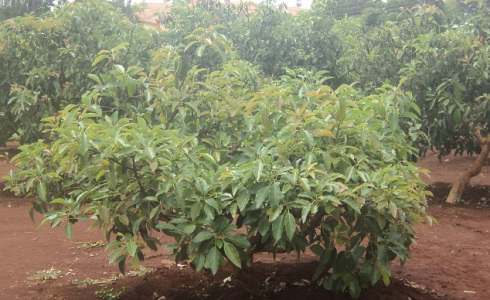
Hass Avocado Orchard
Fruit growing thrives best in certain geographical areas, the business is not capable of equal development in all parts of the country. Different fruit trees do well in different parts of the country. There are various determinants in fruit growing that a farmer must keep in mind before investing in a venture of her/his choice. They include; soil determinant, moisture determinant, temperature determinant, parasite determinant, market determinant among others. The location and site where the orchard is to be established should be determined. The choice of location should be with reference to weather and market. It is also beneficial for the farmer to locate her/himself among fruit growers so as to interact with fellow farmers as they share ideas and develop the fruit mind. Such a location has a potential of attracting buyers and sellers, and also encourages many forms of cooperation among farmers. When it comes to sourcing of market, volume matters hence the need to position oneself in an area that is regarded as a fruit region. For instance we are starting a 2 acre hass avocado project in Kitale. It will make no economic sense for a buyer to come all over from Nairobi to buy our produce due to volume. So it is up to us to create a “hass fruit region” in Kitale by encouraging our neighbors and other local farmers to plant hass avocado. We will go to the extent of giving interested farmers hass avocado seedlings on debt to be paid using part of their harvest.
After all fruit growing determinants have been considered and a farmer has settled on the fruit type/s she/he wants to cultivate, SEEDLING PROCUREMENT is the next step. There are different fruit seedlings vendors where one can purchase seedlings from; an online search can give you a few clues. There are also different government agencies that stock fruit seedlings, they include: JKUAT, KARLO and some prisons too raise fruit seedlings for sale. When purchasing from any chosen vendor ensure you get a good deal in terms of; the right variety,certified. disease free, right price and replacement in case of initial failure.Our major role is to ensure aspiring fruit farmers get technical support and have a strong foundation when starting out their perspective ventures. We do have 4 different strategies depending on the farmer’s budget, where one can get quality and true to type seedling varieties.
- 18 months old seedlings – These are seedlings that are more than a year old and are meant for farmers whose aim is to get the first harvest within 2 years. Such farmers also don’t have much time to tend to small seedlings or replacing the ones which failed. As for the farmers we have dealt with, the success rate is 99%. A seedling goes from kshs 300-500 depending on fruit type.
- 6-9 months old seedling – Most farmers with a moderate budget have gone this route. These are seedlings that have fully healed, grafting paper removed and ready for planting. A seedling goes at Kshs 120-300 depending on fruit type.
- On-site grafting – we supply rootstocks to farmers to plant, and then we will come to graft them later once they are well established. Our grafters are certified and experienced attaining a success rate of 90%. This approach suits farmers who have a limited budget because they end up saving up to 40% on seedling cost.
- On-site raising of seedlings – There are certain advantages of raising seedlings in the same area where they are going to be planted. Farmers who have large tracts of land and want to implement a large scale project but don’t have enough cash can consider this option. We assist farmers in setting up fruit tree nurseries on-site to produce seedlings to be planted once they are ready.
N/B – When it comes to seedling production, we produce quality over quantity because we try as much as possible to have a wide variety of fruit trees. Therefore we do offer discounted rates to those who pre-order large quantities for commercial purposes.
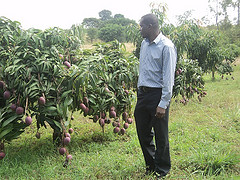
Mango Orchard
It is best if LAND PREPARATION is done prior to purchasing your seedlings. This entails clearing the land, ploughing if necessary and digging holes. Keep in mind is the spacing of your trees; different fruit crops have different spacing requirements. Fruit trees are wide feeders therefore advisable to give them sufficient space when planting. There are cases where farmers go for high density plantations but this requires experience and high maintenance. In general, it’s safer to plant trees widely to have open spaces for sunlight penetration and for easier management. The hole should be broad, as a general rule, the harder the soil the larger the hole. In loose and deep soils, just dig a hole that fits the seedling well. Plant your trees when the soil is dry; don’t plant in wet and sticky soil. We encourage top dressing using manure rather than planting with a mixture of manure and soil. Roots should spread out looking for food, when you top dress using manure and the tree is watered, nutrients will sink in the soil and the roots will do the searching making them stronger. Any subsequent fertilization that is to be done should be informed by a soil and/or leaf analysis. If possible mulch your trees after planting. It is also advisable to plant annual cover crops that improve soil fertility when your fruit trees are still young. Avoid planting grain and hay in your orchard. There are cases where one wants to maximize land use and also desires quicker returns. This can be achieved by planting 2-3 different fruit crops in the same piece of land. Here the differentiating factor is the duration for maturity. One can plant avocados with a spacing of 8m (long term), then plant tree tomato or pawpaw in between (medium-term), and finish by planting strawberries or gooseberries beneath (short-term). This is done in the initial years once the avocados gain room these other crops should be removed.
A SYSTEM must be put in place to ensure maximum production, without systems you have a limited chance of keeping track of your fruit plantation. It is important to keep track of each individual tree/variety and make a record of the performance of each tree. This ensures each tree is given the necessary conditions for optimum production. Keep simple cost-accounting records and daily work reports. Tree care practices such as irrigation, fertilization, spraying, pruning and fruit thinning should be taken into account and done at the appropriate time. Your records should reflect all these activities. Irrigation and fertilization is done on a need basis. We recommend being proactive and spray your trees as a preventative measure rather than waiting for a disease and/or pest attack. Pruning determines tree shape and should be done from the onset as the tree grows. With the current fruit grading system, especially for those targeting the export market, fruit thinning is an important practice that should not be overlooked. This is done by removing redundant fruits resulting in an end product that is superior in size, colour and general quality. Fruit bagging is necessary if one desires extra-fine fruits. When it comes to harvesting it is important to do it at the right time depending on the fruit variety; there those that ripen on the tree and those that ripen off the tree.

Apple Orchard in Voi
MARKETING of your fruit produce begins early even before planting the fruit trees, for instance someone planting hass avocado or macadamia already knows there is export market. Know your market, we normally tell our customers’ that you are your own market and thanks to technology one can brand and market her/his venture at much lower cost. As personal as it is, Success will be determined by the ability of the grower and market conditions. Truth be told, 2 persons placed in the same geographical and environmental conditions and given an equal chance will attain different business results. It all boils down to high quality production and careful marketing. If you grow what people want or present it in a manner that makes them think they want it, success will follow suit. When it comes to market target, there are two kinds of commercial fruit farmers; those who grow fruit for a special or personal market and those who grow for the general or open market. It is prudent for one to know where she/he falls so as to produce the desired quality. Generally in the case of special market, the operation is small scale and high quality fruit is produced to be sold at much higher prices. Here farmer looks for his own customers and is independent of general trade. Those targeting the general market have no personal customers; they grow what the market demands and are subjected to prevailing market prices.
Message to the world market is that Kenyan fruit produce meets high environmental threshold. Kenya has plenty of land lying idle and there are no forests that need to be cleared for commercial fruit cultivation. Most of forests that are cleared are as a result of human settlement. Young people have started embracing agriculture and are taking over what their parents and ancestors established. The profile of a Kenyan farmer is changing, farmers are now seeking knowledge and embracing technologies that will help them produce high quality, disease free fruits, herbs & nuts destined for the world market. As much as more farmers are targeting export market, dependence on the export market for our fresh fruits is not healthy in the long-term; this should be complemented by value addition. Availability of fresh fruits should lead to the development of fruit processing industries in different counties. Both county and local governments should play a major role to attract investors in such areas.
Anyone going into fruit farming should know that there is stiff competition in this business and it is survival for the skilled. Seek knowledge and train for your work. Ten people can grow quality fruit but only one out of the ten can sell it to advantage. The effort at excellence must be continuous, let no achievement slow you down. As Ray kroc says “When you green you grow, but when you ripe you rot”. Master your local problem, from fellow farmers, books, blogs & forums learn principles and truths but at the end of the day you must solve your problems by yourself. Kindly let us know if we can be of any assistance in your fruit ventures, we can be reached via mail admin@plantafruit.org or +254714118794. To a fruitful 2020!!!!

PERSIMMON KAKI CULTIVATION
Persimmon is a rare fruit tree in Kenya only known to a few; ironically its popularity worldwide closely ranks next to avocadoes. Nutritionally the persimmon fruit is a good source of minerals, vitamins and antioxidants important for optimum health. The trees can grow to a height of 20 feet and takes 3-5 years to start fruiting. Grafted varieties may take 2-3 years to fruit. Same as pomegranate, persimmon fruit trees are either single-stemmed or multi-trunked. Persimmons are classified into 2 major groups as either astringent or non-astringent. The astringent variety loses astringency as the fruit ripens.
The persimmon fruit tree is a hardy plant that is highly adaptable to different climatic conditions with minimal care and intervention. They grow and produce well in both subtropical and temperate areas but prefer slightly warmer areas. Most persimmon cultivars have no chilling requirement like most deciduous fruit trees do. Persimmons prefer deep, fertile and well drained soils with a PH of between 6.0-6.5. All in all they grow well in a wide range of soil and can tolerate heavy clay soil with good drainage. Therefore persimmon can grow well in most parts of the country and farmers should try it out by first planting a few seedlings to gauge how the plants will perform in different localities.

2 Year Old Persimmon Tree
Seedlings used for propagation is grown from seed that can later be grafted. Trees are planted at a spacing of between 4m-6m depending on cultivar and land size. For better fruit production, Plant persimmons in areas with plenty of sunlight. Persimmons are fragile, therefore avoid windy areas or plant windbreakers. Even though persimmons are hardy regular irrigation is recommended during initial stages and during fruit set. Persimmons are heavy producers therefore fruit thinning is essential to ensure good quality and size. Training and pruning maintains well-balanced plant vegetation that eventually leads to quality production. It is advisable to prune persimmons when they are dormant. Soil and leaf analysis will always give insights on the fertilization regime to be applied. Generally farm yard manure and foliar sprays are sufficient.
Persimmons are generally free from most pest and diseases but as a general rule prevention is better than cure. Plant and crop protection is important to guard against any pests or bacteria and fungi disease attacks. Some of the common pests include; fruit flies, mealy bugs and fruit spotting bug. The few important diseases are leaf spot, mildew, wood decay, blights and crown gull. There is no much literature on control strategies for pests and diseases on persimmon kaki. Generally orchard hygiene is crucial and ensure to source disease free seedlings. Spray copper fungicide, horticultural oil or neem oil as a preventative measure before any attacks occur.
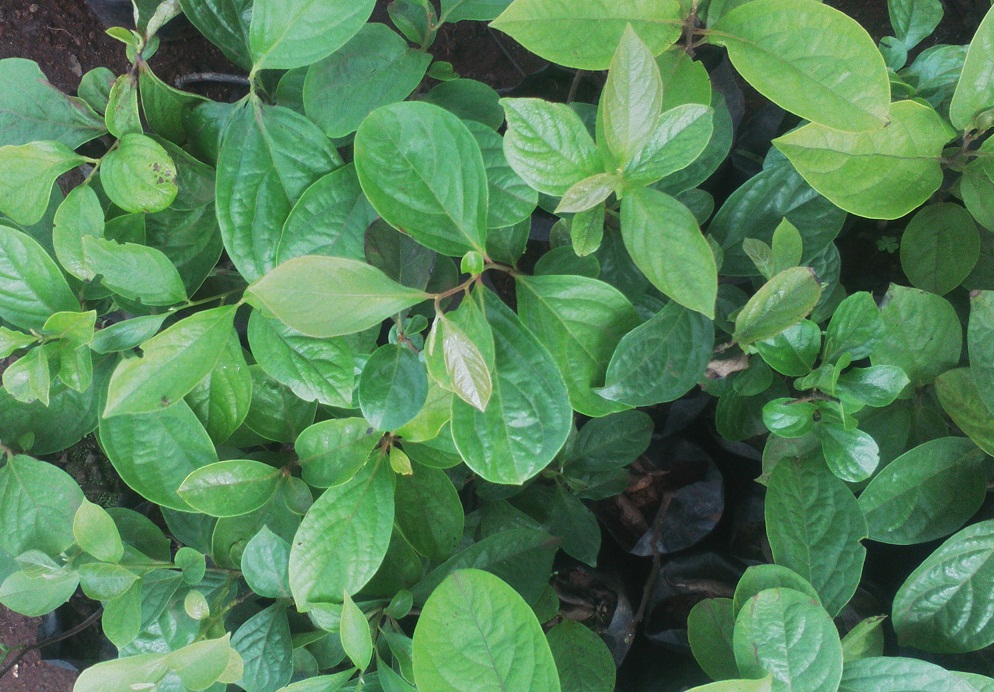
Persimmon kaki Seeedling
Our main objective is to promote fruit cultivation either for subsistence or commercial purposes our main target being small scale farmers. We collaborate with enlighten gardeners and farmers who have a passion for homegrown produce and can go an extra mile to try something new. There are several fruit trees like the persimmons that are grown in Kenya but there is no documentation on best practices and how the fruits perform in different parts of the country. We believe it’s up to us as farmers to try and experiment with the different varieties to gauge their performance in different parts of the Country. We have a catalogue of around 20 different fruit types that we do stock from time to time and have been planted in different parts of the country to monitor how they perform. Feel free to reach us on admin@plantafruit.org or call +254715963005. Fruitful 2019!

Edible Fig Fruit
Fig fruit is one of the ancient fruits known to mankind, mostly grown in tropical and subtropical areas of the world especially in the Mediterranean. It is a nutritious fruit that is richer in iron and copper contents than other fruits. Figs contain high sugar and low acid, and also rich in carbohydrates, vitamin A and C. Fig consumption and commercial cultivation has not taken root in Kenya, only few farmers and home gardeners have embraced this crop and in most cases only a few fig trees have been planted. Kamiti prisons have played a major role in the propagation of fig fruit seedlings and they are among the few fruit tree nurseries that do figs. In the marketplace figs can be spotted at Village market, a few traders deal with them at Gigiri and they don’t come cheap. We are in the process of partnering with a farmer in the outskirts of Nairobi to set up a demo farm of around 100 plants targeting a specific market giving room for expansion and full commercialization if the market responds well.
Figs are low maintenance fruit crops that need less care and can grow in most parts of the country. Fig trees do well in a wide range of soil type the important factor being soil drainage. Avoid areas that have poor drainage for this may lead to nematode infestation, stunted growth and eventual demise of the plant. Generally they should be planted in well-drained soil with plenty of organic matter that will enable them grow into drought tolerant crops once the plant has developed. Soil PH of about 6.0-7.0 is desired. Farmers from arid and semi-arid areas should try out figs; they are among the fruit trees that can thrive in these areas. For maximum fruit production, Plant fig trees in areas where they will get plenty of sunlight and free from competing trees. Good water management, including regular irrigation during initial stages and mulching helps maintain tree health. Fig plants can be trained to tree or shrub form, it all depends with the farmers needs and which form does well in a given area.

A young fig fruit
If figs are planted in the ground, fertilization is less necessary and should only be done after doing a soil test. Compost manure is sufficient to create an enabling environment for the fig plants to thrive. In case there is need to use fertilizers, it should not be applied at planting time. Generally, figs do not require regular fertilizing; excessive fertilizer application can have negative effects on fruit quality. All in all, sufficient nutrients must be supplied to ensure the tree is healthy. Leaf analysis and soil test will come in handy when tailoring fertilizer needs.
With good preventative maintenance figs can be relatively pest and disease-free. Most common pests include; nematodes, mealy bugs, fig beetles, borers and scales. The most important disease is the fig rust, which is a fungus disease that attacks the leaves and anthracnose. This can be controlled by spraying copper fungicides from time to time as a preventative measure. Another important disease is fig mosaic virus, so far there is no cure, and affected plants should be removed so that the virus does not spread. Infected plants should not be used for propagation. Source disease free seedlings for planting and maintain proper sanitation during the lifetime of the fig plant to prevent any disease or pest attacks. Orchard hygiene is important and prevention is better than cure, prune to remove all weak, diseased or dead limbs each dormant season.

Fig fruit seedlings
Figs take 3-4 years to start producing a viable crop. Sufficient irrigation will increase fruit size and production. Fruit thinning will also increase fruit size. Figs can bear two crops a year, the first crop produces substantially compared to the second crop. Figs are Picked from the tree as they ripen, ripe fruits do not exude a milky sap when picked. One should be careful not to get in contact with the milky latex which can cause slight skin irritation. Fig fruits are normally eaten fresh but they may be dried. So far we have seen two varieties doing well in Kenya, we don’t know their names but they can be differentiated by the fruit color. There is a variety that produces yellow figs when ripe and one that produces dark purple-brown figs. For those willing to plant a few fig plants can contact us and make an order.
Figs are among the underutilized fruits in Kenya. At this moment we are not sure if it is commercially viable unless one has a special market. The fact that a fruit commands a high market price doesn’t guarantee commercial viability. Fruits like kiwi, litchi, pomegranate, raspberry, blue berry, goose berry and fig are retailing at more than 1000/= a kilo but the market is limited. Not many Kenyans are aware of the mentioned fruits, we are optimistic that as the masses get informed they will embrace some of these under-utilized fruits. It takes time and expertise to build an industry around a certain fruit crop especially if it is not a mainstream fruit crop. For starters plant a few fig plants for own consumption and sell or donate surplus. Fruitful season!

FOOD FORESTS AS A LEARNING RESOURCE
Our flagship ‘education for sustainable development project’ at Kariobangi North primary in Nairobi was kick-started in 2012; 4 years down the line we have seen tremendous results. In between the years, great work has been done thanks to the more than 1000 people that took part in the project. There are those who contributed financially and those who offered their time to work in the project. We can’t mention everyone but we have shared photos of a good number of persons who took part. Our gratitude goes to the staff and leadership of Kariobangi north primary for their support despite the many challenges. Many thanks go to Eco Schools who saw the potential of the project and offered to boost and push it to another level.

Eco Day Celebration
The children of kariobangi north now have the opportunity to see first-hand best horticultural farming activities being implemented in their school. Those with a passion for farming will have a platform to transform that passion into an enterprise or career. The school’s food forest has different fruit trees that include: apples, grape, sapote, loquat, breadfruit, mangoes, pears, guava, peach, Jabotica, brazillian cherry among others. The school has also planted sweet potato, banana and vegetables which they sell to the local community. This project offers a great learning experience, there is so much practical knowledge on different fruit types one can acquire when she/he visits the project.
This project plays an important role of connecting students with nature at an early age converting them into better stewards of our environment. We need to resurrect the tree planting culture that was emphasized by our former president His excellency Daniel Toroitich Arap Moi, and we believe the best way to do that is to target school going children. Of great importance is the acquisition of food growing/production skills that will go a long way in helping the students later in life. Students gain hands on experience in a hands off environment where they are allowed to experiment and make their own decisions. Students acquire practical knowledge in areas like; Composting, group dynamics, food safety, how to market their produce, pest management, fertilization, seed propagation, record keeping among others. The project also offers great benefit to the entire surrounding community who are free to visit the school orchard and learn one or two things from the different fruit species. Soon they will be able to purchase seedlings from the school’s tree nursery.

Students taking notes at their food forest.
As an organization, we have no share in the projects we implement; anything we plant belongs to the school and all proceeds thereafter are reverted back to the project. Our purpose is to ensure the fruit trees planted are well taken care of and to develop a training and business model that will generate income and make the project sustainable. We take a maximum of 3 years in a school project and then we hand it over to the school after we have trained project beneficiaries to take part in the day to day running of the project. There after we only act as consultants in areas of: seedling production, crop protection, production planning, spray techniques & Schedule, irrigation & fertilization, adult learning, market strategy and sustainable farming.
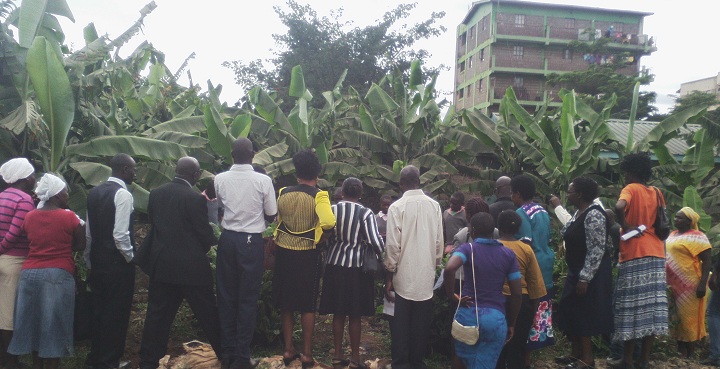
Members of the community visiting the school project.
We are seeking partnerships to ensure such a project is replicated in at least 2 schools in each county to enable students to plant, manage and harvest their own produce as they learn important life skills. Developing an orchard as a learning resource creates an opportunity for the students to be aware of environmental issues and come up with simple solutions to address them. Food security at a local level is tremendously important, especially when crisis hits. Farming is the foundation, as humans we need energy to function and the only source of energy is food. It’s high time we support farming and conservation initiatives both at a personal and institutional level; teach your kids to grow food, support tree/food growing programs in local schools, make donations to credible organizations such as the Green Belt movement among others. We all can be part of the solution by simply planting and taking care of a single tree. And to our dear leaders who ride on any food crisis to gain economically and politically, we only have this to quote; “If you can’t feed them, you can’t lead them”- Anonymous. Plenty be found within our boarders.


 Natural Green Movement