Blog Archives
Feijoa Fruit Seedling Cultivation Tips
Native to southern Brazil, feijoa is an exotic fruit of subtropical origins that can be readily grown in many parts of Kenya. This fruit has a unique flavor and aroma, and is attributed to having a number of medicinal values. Guavasteen and pineapple guava are some of its common names. It is highly nutritious when consumed fresh and luckily it is well adapted having the potential to do well in different parts of the country. This is reason enough for you to plant a few feijoas just as a custodian, for your own consumption and a source of nutrients.
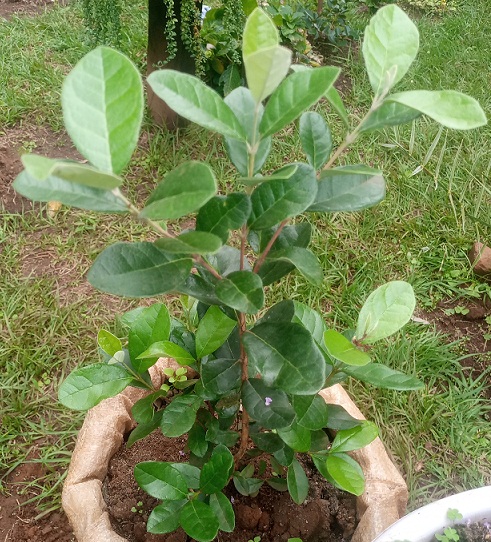
If you opt to plant some, consider the following:
- Climate
Feijoas grow well in the tropics, subtropics and warm temperate areas. If guavas thrive in your location, feijoas will probably do well too. Temperatures between 15°C and 35°C , and an annual rainfall of 1000mm is desirable. You will have to water your plants especially when they are still young or when they show signs of water stress.
- Soil and planting
Most soil conditions are ideal for feijoa cultivation as long the soil drains well and rich in organic matter. Soil PH of 5.0-7.0 is desirable for optimum growth. Ensure your site receives enough sunlight; avoid areas that are prone to cold air and frost.
- Training and pruning
Train your feijoa tree early enough for upright growth and right tree shape. Prune you trees after harvesting season is over. You need a tree that is a metre above your height. This will enable easier maintenance and harvesting.

- Pests and disease
Feijoa even though resistant to pest and diseases, you still need to ensure your plants are well fertilized to avoid any nutrient deficiencies that may lead to disease and pest attack. Common pests include: fruit fly, caterpillars and scales. Leaf spot fungal disease is a major concern that we have not so far. Watch out for any signs of early disease and pest attack and act accordingly.

- Harvesting
Your plant is likely to start fruiting in the 3rd – 4th year of planting. The fruits do not change colour when ripe so it is hard to determine if they are ripe by observation. Fruit that are ripe naturally drop from the tree. Fruits that ripen on the tree will detach easily when harvesting. Plant It!!!
Hass Avocado seedlings
Hass Avocado cultivation
Avocado still is an important commercial fruit in Kenya. Local consumption keeps rising so is the export figures. More farmers are embracing avocado farming especially the Hass variety. For those targeting export market Hass avocado is the right variety to plant.
Here are a few tips on how to navigate your journey to ensure your crop meets the export standards.
- Climate
Climate greatly determines the quality of your fruit. 1000-1200 annual rainfall is sufficient. Due to irregular rainfall distribution, you should make arrangements to irrigate your trees. For proper growth and yield, temperature of between 25°C and 30°C is desirable
- Soil and fertilization
Your soil should have a good structure and well aerated. Avocados cannot withstand flooding or poorly drained soils. Soil PH of 5 to 7 is proper. Strive to keep your soil fertile and rich in organic matter. Results from your soil test analysis will inform you on the required type and amount of fertilizer to apply.
- Planting Hass avocado seedlings & pollination requirement
We strongly recommend you plant well established certified seedlings. Purchase seedlings that have a strong stem and are above knee height. When planting ensure the grafted union is well above the ground. There are different spacing regimens; 3m by 3m, 4m by 4m 5m by 5m,………. 8m by 8m. Embrace what suits you.

For pollination purposes it is important to ensure you have trees of two different flowering types; A and B. Hass exhibits type A flowers and is advisable to plant a type B variety such as Fuerte or Linda close by. For every 10 Hass avocado seedlings, plant 1 Fuerte seedling or Linda seedling. The presence of both flower types will enhance cross pollination encouraging optimal fruit development and improves production.
- Pruning and training.
It is important you train and prune your trees when they are still young to reinforce lateral growth and multiple structure branching. You are also to ensure there is no sucker growth below the grafted union. Later on trees are only pruned to remove excessive growth or any dead branches and to attain desired tree shape and height.
- Crop care and protection.
Contrary to popular belief that avocados are not susceptible to disease or pest attack, this is not the case. Pests of significant economic importance include:
- Fruit flies
- False codling moth
- Thrips
Major diseases are: Anthracnose, scab, stem end rot, root rot, bacterial canker
Take preventive measures to minimize cases of disease or pest attack. When planting, make sure you plant suitable and healthy seedlings that are free from disease. Embrace good growing and sanitation practices. These include:
- Using pheromone and sticky traps to monitor and reduce flying pests.
- Mitigate any attacks using approved bio pesticides and fungicides
- Proper weed control and mulching
- Irrigate your trees on a need basis
- Ensure your trees are well fertilized
- Use foliar spray to address any micro nutrients deficiencies especially boron and zinc

- Harvesting
Before harvest, it is important to assess the maturity of the fruit. Avocado fruit matures on the tree but ripens off the tree. Maturity is estimated by the percentage of dry matter in the fruit; a minimum of 23% dry matter is acceptable for Hass avocado. The ministry of agriculture has enforced specific timelines when avocados for export are harvested to avoid the harvest of immature fruits. Get technical advice on when and how to harvest your avocadoes. Ensure harvested fruit is handled with care to minimize fruit damage.
- Marketing your crop
For new small scale farmers; those who have 5-20 trees, lack of capacity will be a major challenge. There is need for small scale farmers in avocado growing counties to encourage one another by forming clusters that will boost production. Quality of your product will determine your access to the export market. You will be doing a good job if more than 80% of your produce is accepted for export.
As a dedicated farmer you should ensure that your fruit possess the following quality attributes:
- Clean, looks fresh and in good shape.
- Free from pests
- Have no skin defect or any visible damage
- No internal defects
- Free from any foreign smell or taste.
- Of great taste when ripe
If farmers can meet capacity and the quality attributes above mentioned, finding market and a good price for their produce will be much easier. Onward ever


 Natural Green Movement